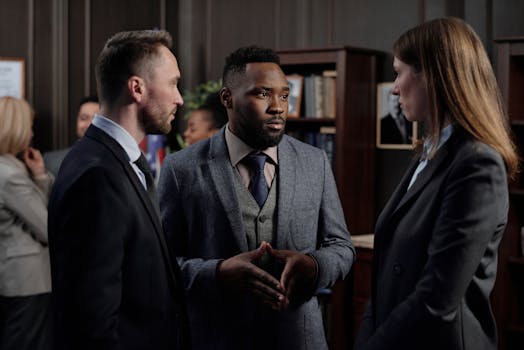
When we hear the word “manslaughter,” our minds often jump to dramatic courtroom scenes or tragic news reports. But what about the legal professionals navigating these complex, often emotionally charged cases? What exactly does a manslaughter attorney do, and what implications does their role carry for justice, for the accused, and for the pursuit of truth? It’s a position that demands more than just legal acumen; it requires a deep dive into the gray areas of human error, intent, and consequence.
What Distinguishes a Manslaughter Attorney?
At its core, a manslaughter attorney is a defense lawyer specializing in cases where an individual is accused of causing another person’s death, but without the premeditation or malice aforethought typically associated with murder charges. This distinction is crucial, as the legal ramifications are significantly different. However, the journey to proving or disproving these accusations is fraught with complexity.
It’s not simply about arguing “it was an accident.” A skilled manslaughter attorney must meticulously dissect the circumstances surrounding the death. This involves understanding various degrees of manslaughter – voluntary and involuntary – each carrying its own set of legal definitions and evidentiary burdens.
Voluntary Manslaughter: Often involves heat of passion or sudden quarrel, where intent to kill might be absent, but there was an intent to cause serious harm.
Involuntary Manslaughter: Typically arises from recklessness or criminal negligence, where death was a foreseeable consequence of dangerous behavior, but not necessarily intended.
The attorney’s task is to build a defense that either negates these elements entirely or mitigates the severity of the charges.
Navigating the Labyrinth of Evidence and Intent
The real meat of a manslaughter defense lies in the evidence. A competent manslaughter attorney will tirelessly investigate every angle. This could involve:
Reconstructing the Event: Working with accident reconstructionists or forensic experts to understand the physical dynamics of what occurred.
Examining Witness Testimony: Identifying inconsistencies or biases in statements that could benefit the defense.
Challenging Cause of Death: In some instances, the defense might question whether the death was directly caused by the accused’s actions, or if intervening factors played a role.
Proving Lack of Intent: Demonstrating that the accused did not possess the requisite mental state for the crime, whether it was recklessness, negligence, or an absence of any culpable state of mind.
One thing to keep in mind is that the prosecution’s narrative often starts with a strong presumption of guilt based on the unfortunate outcome. The defense attorney’s job is to introduce reasonable doubt, challenging that presumption at every turn. This requires an almost detective-like approach, coupled with a profound understanding of criminal law and procedure.
The Ethical Tightrope: Defending Difficult Cases
Defending someone accused of causing a death is inherently challenging, not just legally but ethically and emotionally. A manslaughter attorney often finds themselves facing public scrutiny and judgment, regardless of the evidence. How do they reconcile their duty to their client with the societal need for accountability?
In my experience, the most effective attorneys in this field operate with a clear understanding of their role: to ensure their client receives a fair trial and that their rights are protected. This doesn’t equate to condoning the death; it means ensuring the legal process is followed rigorously and that the prosecution meets its burden of proof beyond a reasonable doubt.
It’s interesting to note that a manslaughter attorney isn’t just fighting for their client’s freedom; they are also upholding a fundamental principle of the justice system – the presumption of innocence. They champion the idea that everyone deserves a vigorous defense, even when facing the most serious accusations.
Beyond Acquittal: Mitigation and Alternative Outcomes
While an acquittal is the ultimate goal for any defense attorney, it’s not always the only or most realistic outcome. A skilled manslaughter attorney will also explore avenues for mitigation. This can involve:
Negotiating Plea Bargains: If the evidence strongly suggests culpability, the attorney might work to negotiate a plea to a lesser charge, such as a misdemeanor or a less severe form of manslaughter, with a more manageable sentence.
Focusing on Sentencing: If a conviction is unavoidable, the attorney’s focus shifts to presenting a compelling case for leniency during sentencing, highlighting mitigating factors like the client’s remorse, lack of prior offenses, or circumstances that contributed to the event.
* Exploring Diversion Programs: In certain situations, particularly with involuntary manslaughter charges stemming from recklessness rather than malice, alternative programs might be available that focus on rehabilitation.
This strategic approach requires foresight and a deep understanding of judicial discretion and sentencing guidelines. It’s about finding the best possible resolution for the client under difficult circumstances.
The Broader Implications: A Question of Justice
The role of a manslaughter attorney extends beyond the courtroom walls. They are integral to the functioning of a just legal system. By scrutinizing charges, challenging evidence, and advocating for their clients, they prevent potential miscarriages of justice. They remind us that every accusation, no matter how serious, must be proven through due process.
Furthermore, the very existence of specialized legal representation like that of a manslaughter attorney forces society to confront the nuances of human behavior. It highlights that not all deaths are the result of deliberate evil, and that understanding intent, context, and culpability is paramount.
Final Thoughts: The Unseen Architects of Fairness
When you consider the immense pressure, the complex legalities, and the profound human element involved in manslaughter cases, the importance of a dedicated manslaughter attorney becomes undeniably clear. They are not simply defending individuals; they are often defending the very principles of fairness and due process that underpin our society. Their work, though often unseen by the public, is a critical, if sometimes uncomfortable, component of the pursuit of justice. If you or someone you know is facing such a grave accusation, understanding the crucial role of such an attorney is the first step toward navigating that daunting path.